
Cylindrical Roller Bearings
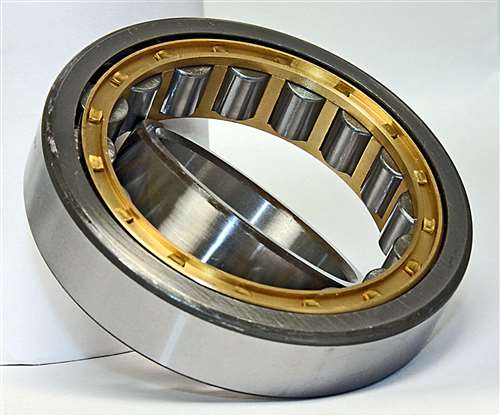
Cylindrical roller bearings are available in a wide range of designs, series, variants and sizes. The main design differences are the number of roller rows and the inner/outer ring flanges as well as cage designs and materials.
The bearings can meet the challenges of applications faced with heavy radial loads and high speeds. Accommodating axial displacement (except for bearings with flanges on both the inner and outer rings), they offer high stiffness, low friction and long service life.
Cylindrical roller bearings are also available in sealed or split designs. In sealed bearings, the rollers are protected from contaminants, water and dust, while providing lubricant retention and contaminant exclusion. This provides lower friction and longer service life. Split bearings are intended primarily for bearing arrangements which are difficult to access, such as crank shafts, where they simplify maintenance and replacements.
Ball Bearing Units
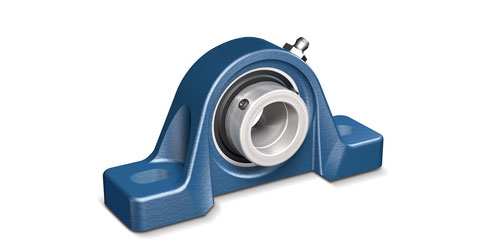
bearing unit is a combination of a radial ball bearing, seal, and a housing of high-grade cast iron or pressed steel, which comes in various shapes. The outer surface of the bearing and the internal surface of the housing are spherical, so that the unit is self-aligning. The inside construction of the ball bearing for the unit is such that steel balls and retainers of the same type as in series 62 and 63 of the deep groove ball bearing are used. A duplex seal consisting of a combination of an oil-proof synthetic rubber seal and a slinger is provided on both sides.
Self Aligning Ball Bearing
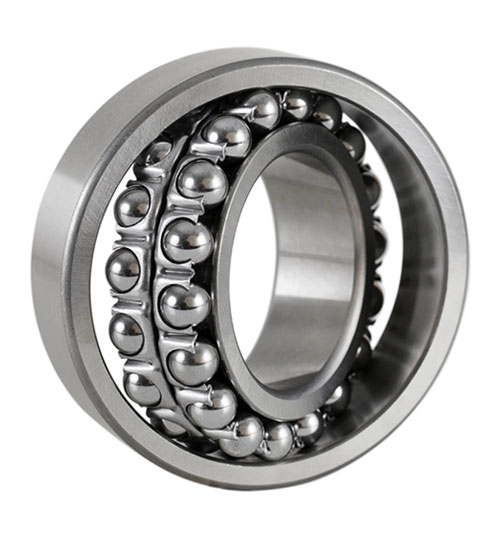
This type of ball bearing is recommended when alignment of the shaft and housing is difficult and the shaft may flex. The outer ring has a spherical raceway and its center of curvature coincides with that of the bearing; therefore, the axis of the inner ring, balls and cage can deflect to some extent around the bearing center. Pressed steel cages are usually used.
Since the contact angle is small, the axial load capacity is low. The permissible dynamic misalignment is approximately 4 to 7 degrees under normal loads.
However, depending on the surrounding structure.
Tapered Roller Bearings
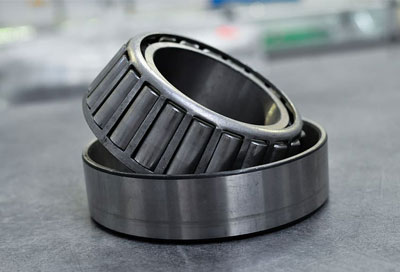
Tapered roller bearings are rolling element bearings that can support axial forces (i.e., they are good thrust bearings) as well as radial forces.
The inner and outer ring raceways are segments of cones and the rollers are tapered so that the conical surfaces of the raceways, and the roller axes, if projected, would all meet at a common point on the main axis of the bearing. This geometry makes the motion of the cones remain coaxial, with no sliding motion between the raceways and the OD of the rollers.
This conical geometry creates a linear contact patch which permits greater loads to be carried than with spherical (ball) bearings, which have point contact. The geometry means that the tangential speeds of the surfaces of each of the rollers are the same as their raceways along the whole length of the contact patch and no differential scrubbing occurs.
Needle Roller Bearing
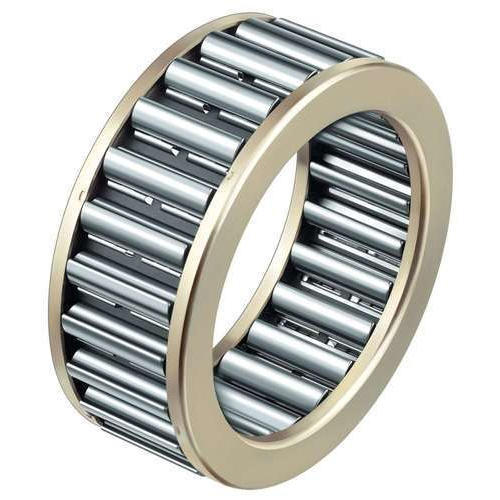
A needle roller bearing is a special type of roller bearing which uses long, thin cylindrical rollers resembling needles. Ordinary roller bearings' rollers are only slightly longer than their diameter, but needle bearings typically have rollers that are at least four times longer than their diameter like all bearings, they are used to reduce the friction of a rotating surface.
Compared to ball bearings and ordinary roller bearings, needle bearings have a greater surface area in contact with the races, so they can support a greater load. They are also thinner, so they require less clearance between the axle and the surrounding structure.
Needle bearings are heavily used in automobile components such as rocker arm pivots, pumps, compressors, and transmissions. The drive shaft of a rear-wheel drive vehicle typically has at least eight needle bearings (four in each U joint) and often more if it is particularly long, or operates on steep slopes.
Chain Drives(Chains and Sprockets)
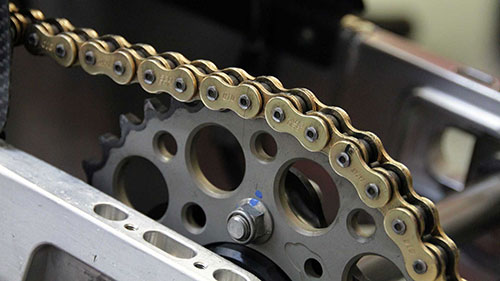
Chain drive is a way of transmitting mechanical power from one place to another. It is often used to convey power to the wheels of a vehicle, particularly bicycles and motorcycles. It is also used in a wide variety of machines besides vehicles.
Most often, the power is conveyed by a roller chain, known as the drive chain or transmission chain, passing over a sprocket gear, with the teeth of the gear meshing with the holes in the links of the chain. The gear is turned, and this pulls the chain putting mechanical force into the system.
Spherical Roller Bearing
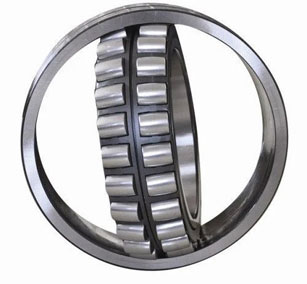
A spherical roller bearing is a rolling-element bearing that permits rotation with low friction, and permits angular misalignment. Typically these bearings support a rotating shaft in the bore of the inner ring that may be misaligned in respect to the outer ring. The misalignment is possible due to the spherical internal shape of the outer ring and spherical rollers.
Despite what their name may imply, spherical roller bearings are not truly spherical in shape. The rolling elements of spherical roller bearings are mainly cylindrical in shape, but have a profile that makes them appear like cylinders that have been slightly over-inflated.
Thrust Ball and Roller Bearings
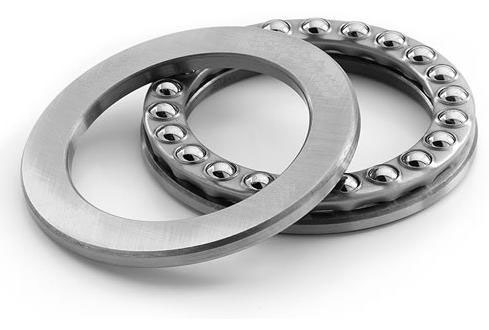
A thrust bearing is a particular type of rotary bearing. Like other bearings they permit rotation between parts, but they are designed to support a predominantly axial load.
Thrust ball bearings, composed of bearing balls supported in a ring, can be used in low thrust applications where there is little axial load.
Cylindrical thrust roller bearings consist of small cylindrical rollers arranged flat with their axes pointing to the axis of the bearing. They give very good carrying capacity and are cheap, but tend to wear due to the differences in radial speed and friction which is higher than with ball bearings.
Plummer Blocks
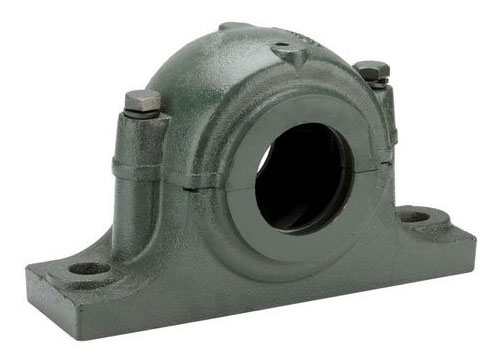
Plummer Blocks are available with a variety of end covers and offer special seal options for special environments. Split plummer blocks offer easy mounting and dismounting of pre-assembled shafts.
Used with self-aligning ball bearings or high-capacity spherical roller bearings, plummer blocks are manufactured from high-strength cast iron as standard but are also available in spheroidal graphite, cast iron or cast steel. Blocks are made to be re-lubricated with either oil or grease.
Deep Groove Ball Bearing
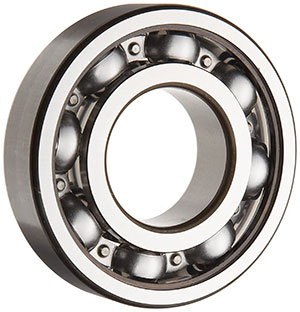
Deep groove ball bearings are the most widely used bearing type and are particularly versatile. They have low friction and are optimized for low noise and low vibration which enables high rotational speeds.
They accommodate radial and axial loads in both directions, are easy to mount, and require less maintenance than other bearing types.